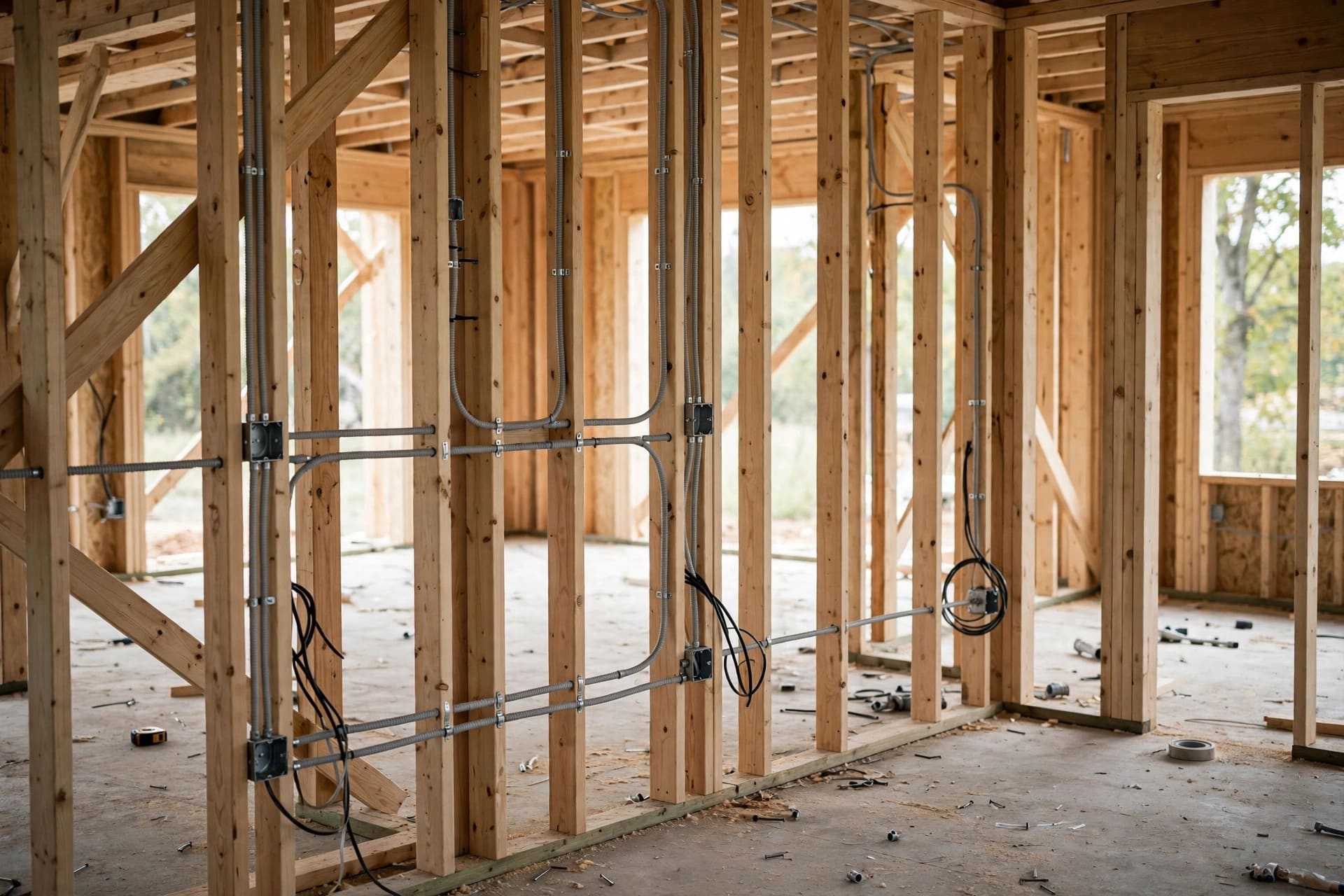
A kitchen is usually the most expensive room in a renovation, and the most difficult to price from a description. Two kitchens of the same size can differ by tens of thousands of pounds depending on the state of the walls, the services, the joinery and the appliances.
This guide breaks down where the money actually goes in a London kitchen renovation, so you can build a realistic budget before you fall in love with a worktop.
The short answer
For a full kitchen renovation in London, most of our clients spend between £25,000 and £60,000. A straightforward room with a good quality off the shelf kitchen sits near the lower end. Bespoke joinery, stone, structural work and high end appliances push the figure towards the upper end and beyond.
That range includes design, strip out, services, plastering, cabinetry, worktops, tiling, lighting, fitting and project management. It does not include moving into a rental property or replacing furniture in the adjoining room.
Where the money goes
Cabinetry and joinery
Cabinetry is normally the largest single line. Off the shelf units can cost a fraction of bespoke joinery, but they only work if the room is reasonably square and the standard sizes fit.
In older London homes, walls are rarely straight and ceilings are rarely level. Bespoke joinery can use the awkward space properly, hide services and create a calm, built in look. Expect bespoke work to carry a premium, and expect it to take longer to make.
Worktops and splashbacks
Laminate is the cheapest option and can look good in the right setting. Solid surface and quartz sit in the middle. Marble, granite and specialist stones cost more and need more care.
Do not forget the template, fabrication, delivery and fitting. A stone worktop is not just the slab price. Ask whether cut outs, edge profiles, upstands and splashbacks are included.
Appliances
Appliance budgets vary more than almost any other line. A basic oven, hob and extractor set can cost a few hundred pounds. A full set of premium brands can cost more than a small car.
Be clear about what you actually use. A serious cook may value a powerful hob and a quiet extractor. A household that mostly reheats may be better served by a mid range oven and a better layout.
Labour and project management
Labour covers strip out, electrics, plumbing, plastering, tiling, fitting and decorating. Project management covers the planning, scheduling, site checks, deliveries and the endless small decisions that hold a project together.
A cheap labour quote often excludes coordination. Someone still has to be on site when the worktop arrives, when the electrician needs the cabinets in place and when the tiler needs the plumbing finished. That work is real and should be priced.
Structural work and services
Opening a wall, moving a soil pipe, upgrading the consumer unit or adding underfloor heating all add cost. In older properties, it is common to find wiring that needs replacing or pipework that has been patched repeatedly.
A good survey will identify most of this before work starts. A defined contingency covers the rest without turning every discovery into a crisis.
A realistic budget example
Here is a mid range example for a Victorian terrace kitchen of around 14 square metres:
- Design, survey and project management: £4,500
- Strip out and waste removal: £1,800
- Electrics, plumbing and ventilation: £6,500
- Plastering and making good: £2,400
- Bespoke cabinetry and fitting: £18,000
- Stone worktop, upstands and splashback: £4,200
- Appliances: £6,000
- Tiling, flooring and decoration: £3,600
- Contingency at 10 percent: £4,700
That totals around £51,700. The same room with off the shelf cabinets, a laminate worktop and mid range appliances could land nearer £28,000. Neither figure is right or wrong. They are different specifications.
Where to save without regret
- Choose a simpler cabinet door. Shaker and slab doors are usually cheaper than complex profiles.
- Keep the services where they are. Moving a sink or hob across the room adds pipework and cable runs.
- Use standard cabinet sizes where the walls allow it.
- Spend on the things you touch. Taps, handles and drawer runners affect daily life more than a feature splashback.
- Phase the work. A new kitchen now and a later extension can be planned together to avoid doing the same job twice.
Where not to save
- Ventilation. A recirculating hob filter is not a substitute for proper extraction to outside.
- Waterproofing around sinks and wet areas.
- Electrical safety. Old wiring and DIY additions are a false economy.
- Project management. Someone must own the programme, the deliveries and the trades.
- A proper survey. Guessing at the condition of a Victorian kitchen is how budgets fail.
How to compare quotes
Ask every contractor for the same level of detail. A single line saying "kitchen fit" is impossible to compare with a schedule that lists joinery, stone, appliances, electrics and decorating.
Check:
- What is included in the cabinetry price
- Who supplies and fits the appliances
- Whether worktops and splashbacks are included
- What happens if hidden defects are found
- How payments are staged
- What guarantee is offered, and for how long
If a quote is dramatically cheaper than the others, find out what has been left out before you celebrate.
Next step
If you are planning a kitchen, our kitchen renovation service explains how we design, price and build the room. You can also request a free quote and we will help you set a realistic budget from the start.